Is Shopify Legit? Beware of These 7 Common Scams!
Shopify is one of the most popular e-commerce platforms. With over 4.5 million users, it’s definitely a reliable CMS choice for anyone looking to start an online store.
But despite all of that, it’s a fair question that many still ask:
“Is Shopify really legit?”
The answer is absolutely, it is. Shopify itself is a trustworthy platform. But like with any big name in tech, its popularity also attracts scammers looking to take advantage of unsuspecting users. That’s why it’s important to be aware of what’s safe and what to watch out for.
As official Shopify partners who have built hundreds of stores, we understand the platform really well. We believe that by sharing everything merchants should know upfront, we can help you protect your investment, save time, and set your store up for success. So, let’s get into the key things you need to know about Shopify.
Is Shopify Legit?
Yes, Shopify is 100% legit and safe. In fact, it is the second most widely used CMS globally. As of January 2026, Shopify holds a 7.7% share of the global Content Management System market, ranking second after WordPress. Here are some of the USP of the platform that make it a trusted and popular choice among the merchants:
- Shopify has robust security features like built-in SSL encryption, PCI compliance and regular audits.
- The pricing is very simple and transparent, which boosts merchants’ confidence in choosing their platform.
- They offer 24/7 customer support.
- It offers hosting, website building, payment processing, inventory management, and marketing tools all under one roof.
- It allows merchants to easily sell on social media and big marketplaces like Amazon and eBay.
- With support for multiple languages, currencies, and international shipping, Shopify enables merchants to sell globally.
Is Shopify Safe?
Safety is one of the primary concerns of merchants. The good news is that Shopify is built with security at its core, as it offers a safe environment for both store owners and customers. It includes features such as SSL encryption, PCI compliance, and automatic security updates. With all these in-built features in place, your store and all associated data remain protected around the clock. Plus, Shopify also hosts your site on secure servers, so you don’t have to worry about managing that side of things yourself. Whether for handling customer payments, storing product data, or scaling your store, you can trust that Shopify has strong security systems to keep everything safe.
Top Reasons to Trust Shopify as a Seller
So far, we have looked at how legit and widely trusted Shopify is within the merchant community. We also touched on its strong security features and its global popularity. Now, let’s move on to some of the top reasons why sellers continue to trust Shopify as their go-to platform.
Full Ownership
One of the biggest advantages of selling on Shopify is that you fully get to own your store. Unlike marketplaces like Amazon and Etsy, where you can sell but only under their rules and restrictions, Shopify gives you total control. You own your domain, your branding, customer data, and even content. So, this means you are not at the mercy of sudden policy changes, account suspensions, or competitive ads being shown on your products. Your business operates on your terms, and that’s a huge trust factor for serious sellers who wish to build something long-term.
Ideal Platform for Growth
Shopify is designed to grow as your business grows. That’s why it is so much preferred among small business owners. You can start with just ten products and take it to even ten thousand. That’s the kind of scalability Shopify gives you. As your sales increase, you can upgrade your plan and access more advanced tools. You can also consider switching to Shopify Plus, which for enterprise-level support. With Shopify, you can skip the worries of migrating to different platforms as changing needs change and as it evolves with you. Due to this future readiness of Shopify, it is highly trusted among sellers who want to build something serious.
Safe App Ecosystem
Shopify doesn’t just offer a massive app ecosystem, but every app listed in its app store goes through a review process to ensure it meets the highest security standards. That means sellers can confidently install apps to extend the capabilities and functionalities of their store. Isn’t it a big deal? You get the freedom to customize your store without compromising the security or performance, or taking any unnecessary risks.
Performance Focussed CMS
From server management, content delivery networks, and caching to uptime monitoring, Shopify takes care of all the technical support. That means when you are opting for Shopify, you are not just getting a regular content management system but a reliable shopping experience.
Clear Platform Roadmap & Updates
Shopify regularly rolls out new features and security updates to keep the platform modern and aligned with the sellers’ needs. What’s great is that these updates happen smoothly and transparently without any downtime or complicated upgrades. This ongoing development shows Shopify’s commitment to staying ahead in the industry.
Top Shopify Scams to Watch Out for & How to Prevent Them
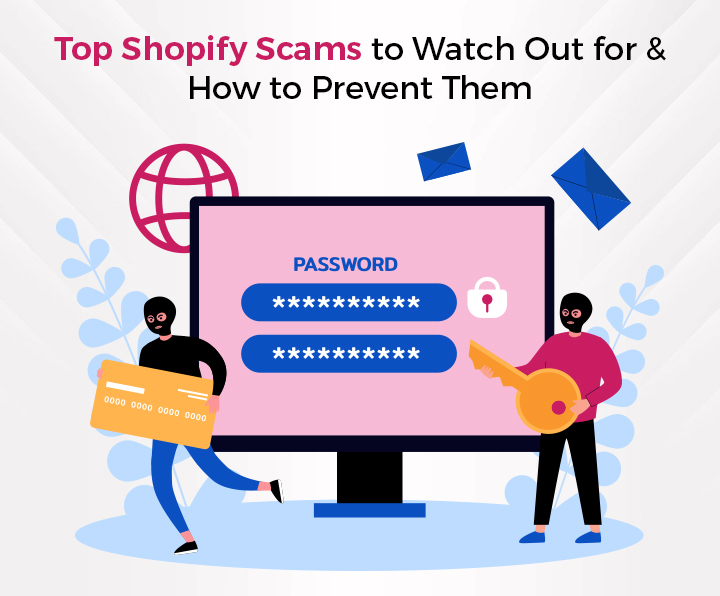
While Shopify is a highly secure platform, scammers can still target the buyers and sellers outside the platform. Here are the top such scams that you need to watch out for:
Store Cloning Scam
In a store cloning scam, fraudsters create a fake version of your store to trick people into thinking they are shopping with the authentic site. They could use your logo, product images and overall design to do so. These cloned sites are usually hosted outside Shopify and use lookalike domains. If something like that happens, it can damage your brand when customers get scammed and think it’s your store. You might also start losing sales to fake sites stealing your traffic. It can also hurt your SEO if duplicate content is picked up by search engines.
That’s why you should always stay vigilant and set up Google Alerts for your brand or product name to catch copied stuff early. You should also search your store name to see if any suspicious sites show up. If you come across any such site, make sure to report it to the hosting providers and take it down by informing the concerned authorities. Also, warn your customers about fake versions of your site on your official domain.
Triangulation Fraud
It is a deceptive scheme that can involve your store without you even realizing it. In this scam, the fraudsters list your products on another marketplace like Amazon or eBay, often at a slightly marked-up price. Customers buying from there might believe they are purchasing from a legitimate seller. The scammer then visits your site to place an order using the customer’s stolen credit card and enters the real shipping address. You might fulfill the order, unaware that it was fraudulently purchased.
Later, when the real card owner notices the charge, they may file a dispute. You could be hit with a chargeback, losing both the product and the payment. To prevent this, you must always watch for mismatched order info, like differing billing and shipping addresses. Shopify’s fraud analysis tools and third-party fraud protection apps can also flag such suspicious orders. But you must also stay cautious with bulk orders or sudden spikes from unknown customers. If you observe any suspicious patterns, you should immediately switch the order reviews from automatic to manual.
Fake Return Ticket Trick
In this type of scam, a fraudster buys an item from your store. Then, they contact your support team pretending to be the buyer and claim they returned the item. They provide a fake tracking number, a doctored return receipt showing the package was shipped back. Based on proof, you might issue a refund or ship a replacement when, in reality, no return was made.
To prevent this, you should check the tracking on the carrier’s official site. You can also set return policies that require the item to be scanned as delivered to your returns before issuing a refund. Use the return labels you created; it’s much harder to fake. Hold high-value refunds for manual review and ask for additional proof. Besides all this, you can also require customers to open a return in your system before returning items.
Switching Fraud
This is also a very common type of scam where some buyers may try to take advantage of your return policy to get a refund while keeping the real product and sending you the fake one. Such scams can be prevented by allotting log serial numbers and product IDs when shipping certain items. You can also use tampered evident packaging or labels. You can ask the customers to record the unboxing videos.
SEO Spam Attacks
Some hackers might target your store by injecting malicious links, fake pages, or unrelated keywords into your site’s code. This usually happens without you even knowing. These attacks are often automated and designed to hijack your store’s SEO for another site’s benefits.
In order to nullify the chances of this happening to your site, you need to use strong and unique passwords for your admin and staff accounts. You must also remove any unused apps and review your third-party app permissions regularly. Using unofficial templates can make your site prone to such attacks, so avoid using them. Shopify’s security tool,s as Shop Protector or MalCare, to scan for such vulnerabilities. Also, make sure to run periodic site audits to catch anything unusual.
Dropshipper Scam
This type of scam frequently targets new store owners and dropshippers, particularly those sourcing products from low-cost suppliers. You should always be cautious while choosing a supplier online through random DM or email. Sometimes you spot them in Facebook groups or a sketchy-looking wholesale directory. Some scammers might even have a fake site that looks legitimate. Usually, these kinds of fraudsters promise unbeatable prices, fast international shipping or high margins. They might even show you the fake product catalogues and testimonials.
A classic red flag for such scammers is that they request upfront payment via bank transfer, cryptocurrency, or other non-refundable methods. Now, when you pay, they might disappear or ship you a completely wrong item. In some cases, they show delay and blame customs and logistics.
You can prevent such fraud by avoiding paying up front. Also, make sure to only use verified platforms.
Phishing Emails
Phishing is a widespread scam where fraudsters impersonate Shopify via emails that look extremely convincing. These emails claim there is an urgent issue, like a breach of security, account suspension, policy violation or payment failure. They will urge the store owner to click on the link or log in to resolve the issue. Upon doing so, they might steal your credentials and login details to access your admin panel. The common signs to look for such scams are:
- They often use urgent and fear-based language to pressure you into taking immediate action.
- The email will include bogus order details.
- The email detail will look similar to Shopify but with slight alterations.
- The link goes to non-Shopify URLs when hovered over.
How Kinex Media can help you build a 100% secure Shopify Store?
In the eCommerce world, all these scams are very common, and they usually target the merchants who are new to the industry. But, you know, nullify the risk by choosing a trusted Shopify Development agency with proven experience in building Shopify stores for various industries. And that’s what we have been doing for so long. Our Shopify Plus Partnership reflects our capability to set up, launch, migrate, and redesign Shopify Stores. From small to large, local to global, B2B to B2C, we help all kinds of brands. Here is how we can build a safe and robust website:
Leverage Our Shopify Partnership
As a Shopify partner, we get priority access to Shopify’s technical support and insider knowledge about upcoming platform updates. We also have access to Shopify’s APIs, SDKs, and development tools. This lets us roll out the latest security features and best practices to keep your store running smoothly.
Vetted App Selection and Custom Integration
Kinex Media will only recommend and integrate apps that have passed rigorous security and performance reviews. This will reduce the chances of malicious activities and prevent automated bot attacks. Using Shopify’s official APIs and SDKs, we can build your custom apps and integrations that will boost your store’s capabilities without risking its security even a bit.
Data Back-Up and Recovery
We will implement robust data backup strategies that will safeguard your store’s essential data, like orders, SEO value, products, customer data, etc. In case of accidental data loss, cyberattacks, or system failures, our experts are highly trained to restore your data with minimal downtime.
Ongoing Maintenance and Support
We will always be available to assist you with technical problems to minimize the downtime. Our continuous support will make sure that your store stays protected against emerging security threats. Besides that, we will also handle the regular updates for themes, apps, and integrations to keep the vulnerabilities at bay. Overall, our proactive monitoring and support will quickly detect any issues before they affect your store’s performance and help your store maintain its uptime, user experience, and performance at a top-notch level.