


Node.js Development Services
Fast Headless Websites Built With Node.js
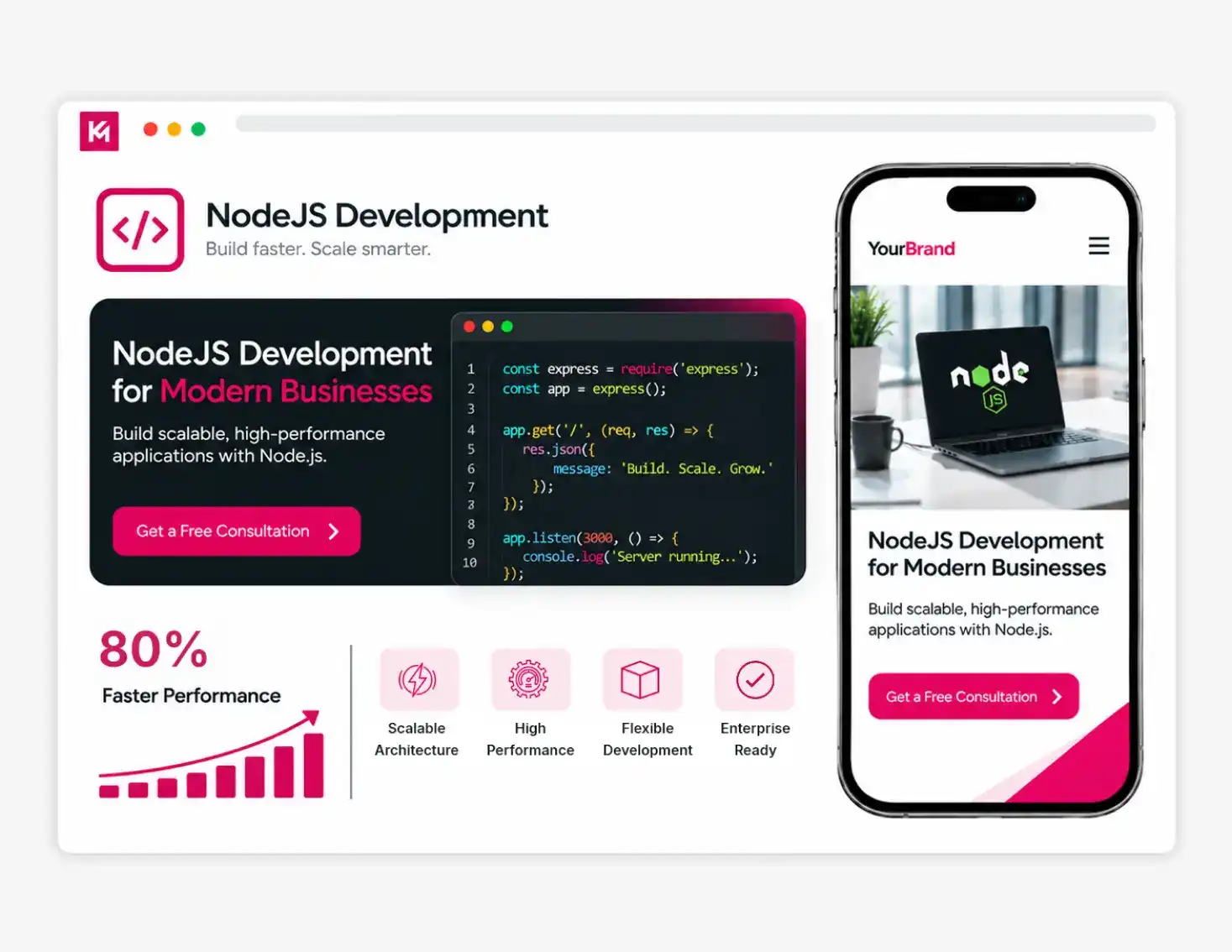
Kinex Media is a Node.js web development company that builds fast, headless websites. The frontend is built in React with Gatsby, which runs on Node.js, and your team keeps editing content in WordPress. Our developers plan, build and look after the site long after launch.


Global Partner to 3000+ Most Successful Brands


Why Do Modern Websites Run on Node.js?
Visitors judge a website in seconds. Slow pages, layouts that jump while loading and plugins that break after an update usually come from how the site is built, not from the content. Node.js is an open-source runtime that runs JavaScript outside the browser, and most modern frontend tools depend on it. Gatsby is built with Node.js: it pulls your content from WordPress, builds each page ahead of time and serves ready-made files to visitors. Where our Node.js web development services help most:

Pages built before a visitor asks for them.

One language, JavaScript, across the whole frontend.

WordPress kept as the editing tool your team already knows.

Fewer plugins running on the live site.

A large open-source ecosystem, kept to the packages you need.

A Node.js release schedule your build can be upgraded around.
What Does Node.js Development Actually Do for You?

Pages Ready Before Visitors Arrive
During the build, Gatsby runs on Node.js, fetches your content and turns each page into static files. Those files can be served from a CDN close to the visitor, so a server has less work to do on every request. Speed still depends on images, scripts and design choices, and those get reviewed during the build too.

One Language Across the Frontend
Components, page templates and build scripts are all written in JavaScript, with React for the interface. Shared components keep headers, product cards and forms consistent across the site, and a change made in one place shows up everywhere it’s used.

WordPress Stays Your Editing Tool
Your marketing team keeps writing pages and posts in WordPress. The Gatsby-Source-WordPress plugin pulls that content into the build through WPGraphQL, so editors don’t need to learn a new system, and the public site sits apart from the WordPress admin.

Less Exposed to Attacks
On a headless build, visitors load pre-built pages instead of talking to WordPress directly. That separation reduces what’s open to the public internet. WordPress still needs updates and strong passwords, which is why every release goes through security checks.

Builds on a Large Open-Source Ecosystem
The npm registry has packages for images, forms, search and analytics, which can save building every feature from scratch. Each package is also code someone else maintains, so a short, well-kept list of dependencies matters more than a long one.

Ready for Traffic Peaks
Static files on a CDN can absorb sudden traffic, like a campaign launch or a news mention, better than pages generated on every visit. Forms, search and other live features still need planning, so we load-test before big launches.
Node.js Web Development Services for Every Stage
Headless WordPress Development
React & Gatsby Frontends
Redesign & Migration to Headless
Node.js Version Upgrades
Security & Release Testing
Support & Monthly Reports
A headless WordPress build splits the site in two: WordPress manages content, and a React frontend built with Gatsby presents it. Every project starts with your content model, mapping page types, fields and the reusable blocks your editors need. You review the plan and designs before coding starts. Changes to WordPress itself, such as custom fields or user roles, are handled by our WordPress development team.
Is your WordPress theme getting slower with every plugin you add?
A discovery session maps what moves to the new frontend.
Contact UsNode.js Development Services for Fast, Headless Websites
Share what your website needs to do, or what isn't working today. Our developers will recommend a setup and give you a realistic timeline.




How Node.js Supports B2C, B2B and D2C Brands

B2C
B2C traffic is rarely steady. Product launches, sales and holiday campaigns can multiply visitors in hours. Pre-built pages served from a CDN help landing pages and blog content stay quick during those peaks, while your marketing team publishes new campaigns in WordPress without waiting on developers.

B2B
B2B buyers research for weeks before they contact sales. They read product pages, spec sheets and case studies, often over several visits. A headless site keeps that content quick to load and well structured, and a shared component library keeps page layouts consistent as the site grows.

D2C
D2C brands live on content: product stories, guides, reviews and a landing page for every campaign. With WordPress for editing and a React frontend for presentation, your team can publish quickly while the site keeps the same look on every page.
Why Choose Kinex Media for Node.js Development?
A headless build isn’t right for every website. For a small brochure site, a well-built WordPress theme may be simpler and cheaper, and we’ll tell you so before you spend money on a rebuild. Kinex Media is a Canadian agency, based in Mississauga and Toronto, that has built websites, ecommerce platforms and integrations since 2008. Our own site runs on Gatsby with headless WordPress, and our developers have used the same approach on client projects such as Amerijet. The frontend and the WordPress setup are planned together by one team, not split between vendors.


Content Model Planned Before Code


Security Checked on Every Release


React Frontend, WordPress Editing


Upgrades Planned Around LTS



Aaron Crangle



I used Kinex Media to build my website and handle my SEO, and they have been terrific. Amir is responsive to all my questions, and the team delivers on what they promise. I highly recommend Kinex Media.














FAQs
Node.js web development services use JavaScript tools that run on Node.js to build and maintain websites. At Kinex Media, that means headless websites: a React frontend built with Gatsby, which runs on Node.js during development and builds, with WordPress as the content editor. The work covers planning, design, development, launch, security checks and ongoing support.
No. Headless works best when speed, design freedom and a growing content library matter, for example, marketing sites with many landing pages or brands that publish often. For a small site with a few pages, a standard WordPress theme is usually quicker to launch and cheaper to run. A short discovery call is enough to tell which fits.
No. WordPress stays as the place your team writes and edits content, manages media and organizes pages. What changes is how the public site is built: instead of a WordPress theme, a React frontend pulls the content and builds the pages. Some plugins that change the front of the site won’t carry over, so your plugin list is reviewed during planning.
Not as a standalone service. Our Node.js work focuses on headless websites: React and Gatsby frontends with WordPress behind them. If your project needs a custom backend, mention it on the first call and we’ll tell you plainly whether it fits our team.
It can help, but it doesn’t guarantee rankings. Pre-built pages load quickly and are easy for search engines to crawl, and the frontend gives full control over titles, metadata and structured data. Rankings still depend on content, links and how carefully a migration is handled, which is why redirects and metadata are mapped before launch.
Cost depends on the number of page templates, how much content moves over, design work, features such as forms or search, and the level of ongoing support. A site with a few templates costs far less than a large content library with many page types. We start with a free call, then a short discovery step, and you approve a written scope and price before any build work starts.
A small site with a handful of templates can launch much sooner than a large site with many page types and a big content migration. Timelines also depend on how ready your content, designs and approvals are. A realistic timeline is part of the written scope after discovery.
Yes. Node.js 18 and 20 have reached end of life and no longer receive official security updates. Node.js 22 is supported until April 2027, and Node.js 24 and 26 are newer LTS releases. An upgrade usually means moving the build to a supported version, updating Gatsby and its plugins, and testing the site before release.
Yes. In most projects, the existing WordPress install stays as the content source. Your content, custom fields and plugins are reviewed first, then the new frontend is built on top. Content your team has already published moves with it, and old URLs are redirected where they change.
Yes. Support covers WordPress and plugin updates, Node.js and package updates, security checks on every release and monthly reports that show what changed. New templates or sections can be added as your marketing needs grow.


Get Your Free Growth Plan in 24 Hours
Award
Winning Agency
Performance
Focused Strategies
Seamless
Project Delivery
Proudly Recognized by Top Brands